
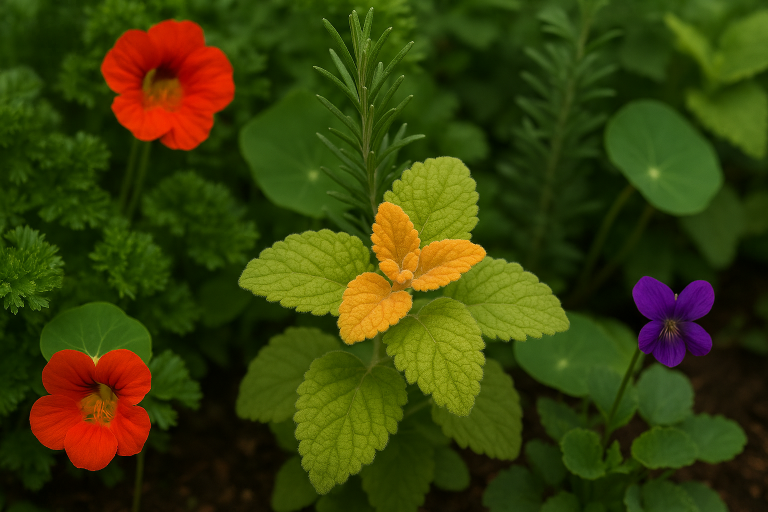

Welcome to my first blog post—where plants meet process, and curiosity meets care. Today I want to introduce you to one of my favorite herbs: Orange Balm. It’s a botanical I grow, tincture, and sip many afternoons, yet it’s rarely found.
🌿 What Is Orange Balm?
Orange balm (Melissa officinalis ‘Mandarina’) is a citrus-scented cultivar of lemon balm, part of the mint family (Lamiaceae). Like its better-known sister, it has square stems and opposite leaves—but here’s the twist: orange balm’s leaves are fuzzy. This soft texture makes it less popular commercially, but to me, it’s part of its charm.
The name Melissa comes from the Greek word for honeybee—μέλισσα (mélissa)—a nod to the nectar-rich flowers that attract pollinators all summer long.
🧬 Scientific Profile
Orange balm contains many of the same compounds as lemon balm, including:
- Geranial & Neral: citrus-scented aldehydes with calming properties
- Rosmarinic acid: known for antioxidant and anti-inflammatory effects
- Flavonoids: plant compounds that support cellular health
Its essential oils are gentler than those found in lemon balm, and its aroma leans toward mandarin orange rather than lemon zest.
In practice, this means:
- Orange balm = clarity, gentle lift, daytime calm
- Lemon balm = unwind, soften, evening relaxation
This is why orange balm has become my go‑to afternoon herb — especially as a tincture in water. Its soft citrus notes and subtle mind‑clearing effect make it perfect for those moments when you want to release a little tension without feeling sleepy. The light fresh sweet taste helps me to enjoy twice the water I would normally consume.
🍊 How Long Has Orange Balm Been Around?
Orange balm is a bit of a mystery herb — not ancient like its lemon‑scented sister, but not brand‑new either. What we do know is this:
🌿 It’s a modern cultivar, not an old-world herb
Lemon balm (Melissa officinalis) has been used for over 2,000 years, but orange balm doesn’t appear in any historical herbals, monastery records, or early apothecary texts. That tells us it wasn’t part of traditional medicine or early European gardens.
🌱 It likely appeared in the last few decades
Orange balm seems to have emerged through:
- A natural mutation
- A gardener noticing a unique citrus scent
- A nursery selecting and propagating a fuzzy‑leafed plant
But there’s no single breeder, nursery, or region credited with “inventing” it.
🧡 No one really knows who started it
Unlike famous cultivars that come with a documented origin story, orange balm simply showed up — someone noticed it, saved it, and shared it. From there, it quietly spread through specialty growers and herb enthusiasts.
🍊 A modern twist on an ancient plant
So while lemon balm carries centuries of history, orange balm is a newer expression of the same species — a fresh, citrus‑warm variation that herbalists like me have come to love for daytime clarity and gentle stress relief.
🫖 My Go-To Afternoon Tea
Here’s the twist I love most: Orange balm is for daytime. Lemon balm is for evening.
Lemon balm’s sedative edge makes it perfect for winding down. But orange balm? It’s my go-to infusion for the afternoon—when I need a gentle lift, not a lull. It relaxes the stress, so I feel calm and focuses but not tired.
I prefer the tincture in my water in the winter and make a tea and ice it in the summer. The flavor is soft, citrusy, and slightly floral. The effect is subtle but real:
- A little stress relieved
- A little clarity returned
- A little joy in the cup
🌼 Why You Don’t See It Everywhere
Its fuzzy leaves make it harder to process. It doesn’t dry as neatly. It’s not as photogenic. But for those who grow and use it, orange balm offers:
- A unique citrus profile
- A gentle touch in teas and tinctures
- A deeper connection to plant diversity
💬 Let’s Talk Orange Balm
If this Journal entry stirred something in you, I’d love to hear it. The Prairie Journal grows through shared stories and quiet conversations, and your voice is part of that landscape. You can write to me at prairiejournal@roseoilandsunshine.com or leave a comment below so we can keep weaving this prairie together.
And if you feel called to taste the difference yourself, I invite you to try my orange balm—grown in Kansas, harvested with care, and offered with joy. I also carry lemon balm for those who enjoy its softer, evening‑leaning calm, so you can explore both sides of this beautiful plant family.


Leave a Reply