
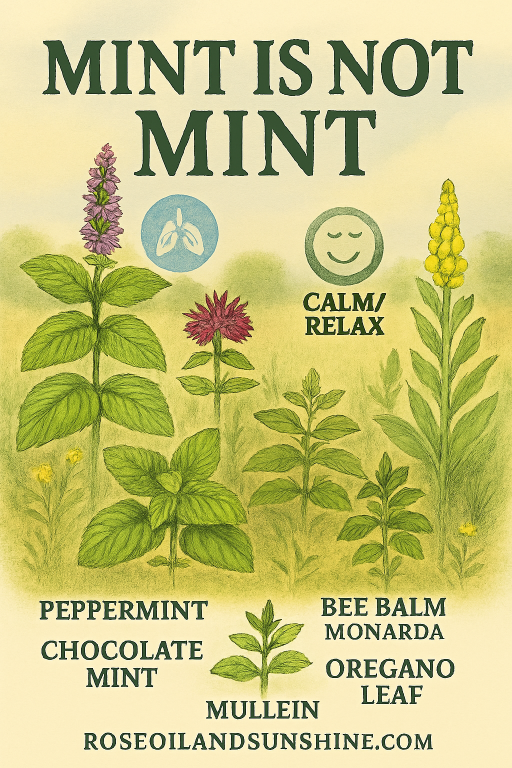
🌿 Mint Is Not Mint: What Actually Clears the Lungs, and What the Other Mints Really Do
Most people think “mint is mint,” as if every variety behaves the same way in the body. But once you start growing them, tasting them, and working with them in whole‑leaf form, you learn quickly that mint is a family is not a – single plant. And like any family, each member has its own personality, strengths, and limits.
The biggest myth I run into is the idea that all mint is good for decongestion. It isn’t. Only one mint truly carries that reputation: peppermint. Peppermint is the mint with naturally high menthol levels — the compound responsible for that cooling, opening sensation people associate with respiratory ease. If you’ve ever felt your sinuses lift after peppermint tea or inhaling peppermint steam, that’s menthol doing its job.
But here’s the truth: most garden mints don’t contain much menthol at all. Spearmint, apple mint, chocolate mint, orange mint, pineapple mint, and even mountain mint all fall into the low‑menthol category. They’re wonderful herbs, but they’re not respiratory herbs. They shine in other ways — digestion, calm, clarity, mood lift, and bright flavor — but they won’t clear your chest the way people assume “mint” does.
So what actually helps with decongestion?
It’s not mint in general — it’s specific plants with strong aromatic compounds:
- Peppermint (high menthol)
- Bee Balm / Monarda (thymol + carvacol)
- Oregano Leaf (powerful aromatic oils)
- Thyme (another thymol‑rich herb)
- Mullein (classic lung herb, soothing rather than sharp)
These herbs have a long history of supporting the respiratory system because of their chemistry, not because they happen to be “minty.”
The mints I grow — apple mint, chocolate mint, and mountain mint — each bring something different to the table:
- Apple Mint is soft, sweet, and calming. Great for digestion and gentle relaxation.
- Chocolate Mint has a little menthol, but not enough to be a lung herb. It’s best for digestion, mood lift, and that cool‑cocoa flavor.
- Mountain Mint is bold and wild, with a resinous edge. It feels refreshing and clarifying, but still not a true decongestant.
They’re beautiful herbs with real benefits — just not the respiratory ones people assume.
Understanding the difference helps you choose the right tea for the right moment. If you want clear breathing, reach for peppermint, bee balm, oregano, or mullein. If you want calm, clarity, digestion, or a bright cup, the other mints shine in their own ways.
Mint is not mint — and that’s the beauty of it. Each one carries its own story, its own chemistry, and its own place in the cup.
| Herb/Variety | Type | Menthol Content | Primary Benefits | Characteristics |
|---|---|---|---|---|
| Peppermint | Mint | High | Decongestion, respiratory ease | Cooling, refreshing, opens sinuses |
| Spearmint | Mint | Low | Digestion, calming | Sweet flavor, soft |
| Apple Mint | Mint | Low | Digestion, gentle relaxation | Soft, sweet, great for soothing |
| Chocolate Mint | Mint | Low (some menthol) | Digestion, mood lift, flavor enhancement | Sweet cocoa flavor, slightly cooling |
| Mountain Mint | Mint | Low | Clarity, refreshing | Bold, wild, resinous, not a true decongestant |
| Bee Balm (Monarda) | Non-Mint | N/A | Decongestion, immune support | Floral taste, aromatic, thymol + carvacrol |
| Oregano Leaf | Herb | N/A | Decongestion, gut health | Strong, pungent flavor, aromatic oils |
| Thyme | Herb | N/A | Decongestion, antimicrobial | Earthy flavor, rich in thymol |
| Mullein | Herb | N/A | Lung support, soothing | Soft leaves, traditionally used for respiratory health |
Understanding the Unique Roles of These Herbs
Peppermint stands out as the most effective for respiratory support due to its high menthol content, which provides that pleasant cooling effect. On the other hand, other mints, like apple and chocolate mint, offer soothing benefits mainly related to digestion and mood enhancement.
Bee Balm and oregano provide strong aromatic compounds, making them excellent choices for respiratory issues. Thyme and mullein are also valuable, with properties that have historically supported respiratory health.
Choosing the right herb depends on the desired benefit, helping you to select an herb that fits your needs perfectly.
Leave a Reply