
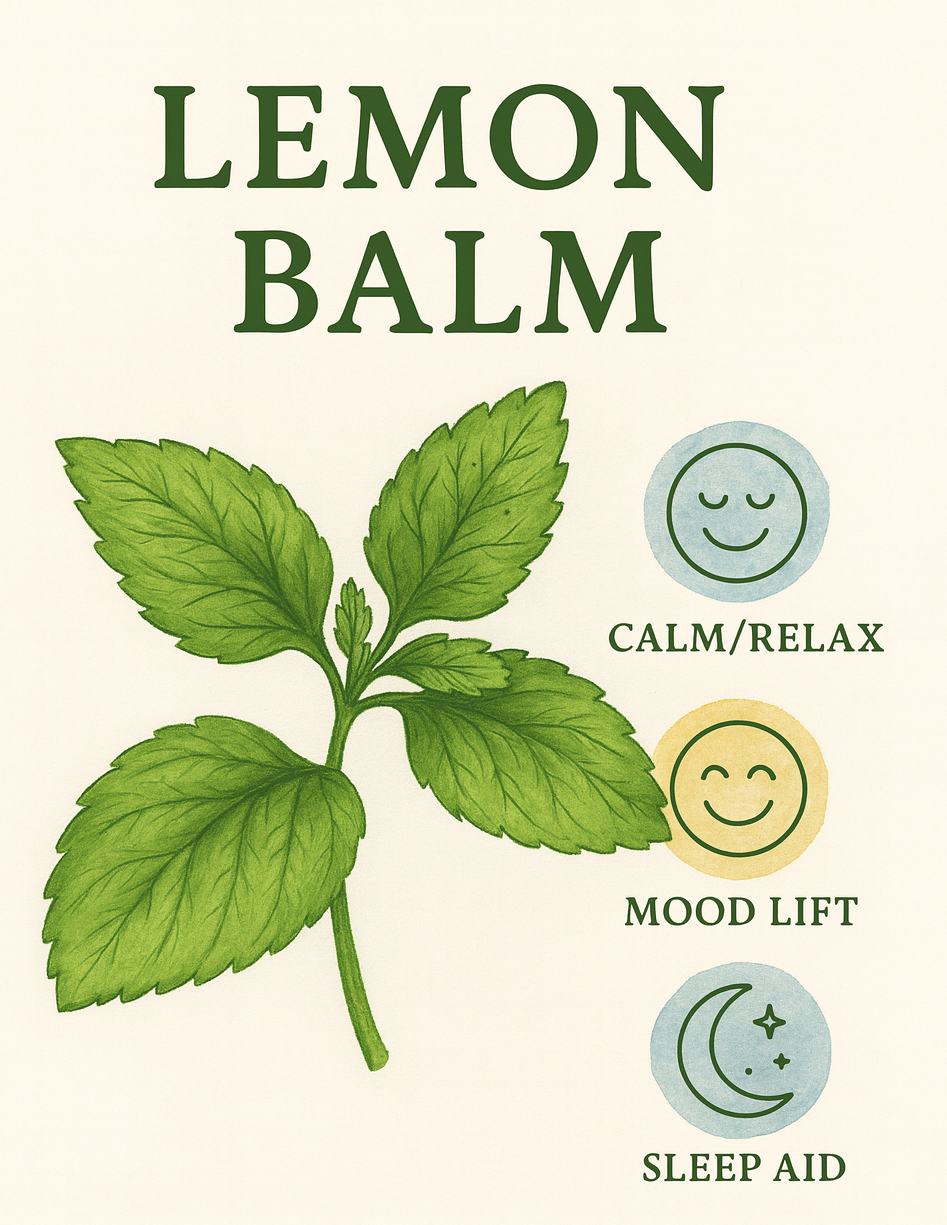
Lemon Balm: The Cognitive brightness, Calming Herb That Works With You
🍵Explore our Lemon Balm tea.
Some herbs move in one direction — they wake you up, or they slow you down, or they help you rest. Lemon balm isn’t one of those herbs. It’s a rare plant that seems to understand the human nervous system better than we do. It can brighten your mind in the morning, soften tension in the afternoon, and help you settle into rest at night. That’s why it shows up in so many different categories on my charts: it’s not confused, it’s simply adaptable.
How Lemon Balm Works Through the Day
Lemon balm carries a natural mix of citrus‑bright aromatics and calming plant compounds that work together rather than against each other. During the day, those aromatics feel clean and clarifying — the kind of brightness that lifts mental fog without adding any jittery edge. When you’re stressed or overstimulated, lemon balm leans into its gentler side, easing tension in a way that feels grounding instead of sedating. And when your body is already winding down, that same calming action simply continues its arc, helping you drift toward rest without forcing anything.
This is why lemon balm has been loved for centuries: it doesn’t push, it harmonizes. It’s not a stimulant, and it’s not a sedative. It’s a balancing herb — one that supports the nervous system in whatever direction you’re already headed. That’s also why every harvest can feel a little different. Soil, sunlight, rainfall, and drying methods all shape the final character of the leaf.
My lemon balm is Organically Grown Uncertified, harvested by hand at peak aroma, and slow‑dried to protect its natural color and compounds. Every batch is triple‑checked, packed in unbleached tea bags, and offered in larger portions so you can double‑brew or enjoy a richer, fuller flavor. The result is a tea that carries the plant’s full personality — Cognitive brightness, calming, and beautifully adaptable.
If you’re looking for a tea that meets you where you are — whether that’s waking up, settling down, or easing into sleep — lemon balm is one of the most generous herbs you can keep in your kitchen.
🍵Explore our Lemon Balm tea.
No medical claims. All tradition, story, and symbolism.
✨ Myth, Legend, Stories & Magic of Lemon Balm
🌿 1. The Herb of Gladness
Across old Europe, lemon balm was known as the “herb of gladness,” a plant believed to brighten the spirit simply by being near it. Medieval households scattered fresh leaves across floors so the citrusy scent would rise with every step, lifting moods and softening tempers. In some regions, it was said that a home with lemon balm growing by the door would never feel heavy or sorrowful for long — the plant itself was thought to invite warmth, laughter, and ease.
🐝 2. The Beekeeper’s Charm
Few plants have a folklore bond with bees the way lemon balm does. Ancient Greek writers described how beekeepers rubbed the leaves inside empty hives to encourage wandering bees to return. The belief wasn’t just practical — it was symbolic. Lemon balm became a plant of reunion, a charm for calling back what has drifted away: peace, memory, loved ones, or one’s own sense of direction. Even today, its genus name Melissa means “honeybee,” tying the plant forever to sweetness, community, and homecoming.
🏺 3. Ancient Stories of Protection
In old-world households, a sprig of lemon balm placed in a doorway was considered a quiet blessing. It wasn’t meant to ward off danger dramatically — it was gentler than that. People believed the plant encouraged harmony, discouraged quarrels, and softened the emotional weather inside a home. Some traditions said that lemon balm’s bright scent confused “restless spirits,” keeping the atmosphere calm and grounded. It was a plant of peacekeeping, not battle.
🌙 4. Dreamwork & Night Magic
Lemon balm appears in several European dream traditions. Its fragrance was believed to settle the mind enough for meaningful dreams to rise. Some stories say that placing a few leaves near the bed helped “untangle the threads” of the day so the sleeper could drift into a more restful night. Others used it in small nighttime rituals meant to encourage clarity — not prophecy, but understanding. Lemon balm’s magic was always gentle, never forceful.
🕯️ 5. A Symbol of Memory & Return
One of the most poetic beliefs surrounding lemon balm is its association with memory. In folklore, the plant was said to help people “remember what they already knew” — a phrase that meant inner wisdom, intuition, or forgotten calm. It wasn’t about recalling facts; it was about returning to oneself. This is why lemon balm often appeared in stories of travelers, widows, and people rebuilding their lives. It symbolized the slow, steady return of clarity after confusion.
🌞 6. A Plant of Light & Warmth
Because of its bright scent, lemon balm was linked to sunlight in many traditions. Some cultures believed the plant carried a “sun spirit,” making it a symbol of renewal after long winters or difficult seasons. It was used in solstice celebrations, woven into garlands, or placed on windowsills to “invite the light back in.” Even today, its fragrance feels like a small sunrise — soft, warm, and encouraging.
🔥 7. Folk Rituals of Everyday Magic
Lemon balm wasn’t a ceremonial herb reserved for rare occasions. It was woven into everyday life. Women tucked it into aprons for good luck. Gardeners planted it near gates to bless visitors. Some placed a leaf in their pocket before speaking difficult truths, believing it helped words come out kinder. Its magic was practical, domestic, and rooted in the rhythms of ordinary people.
Leave a Reply